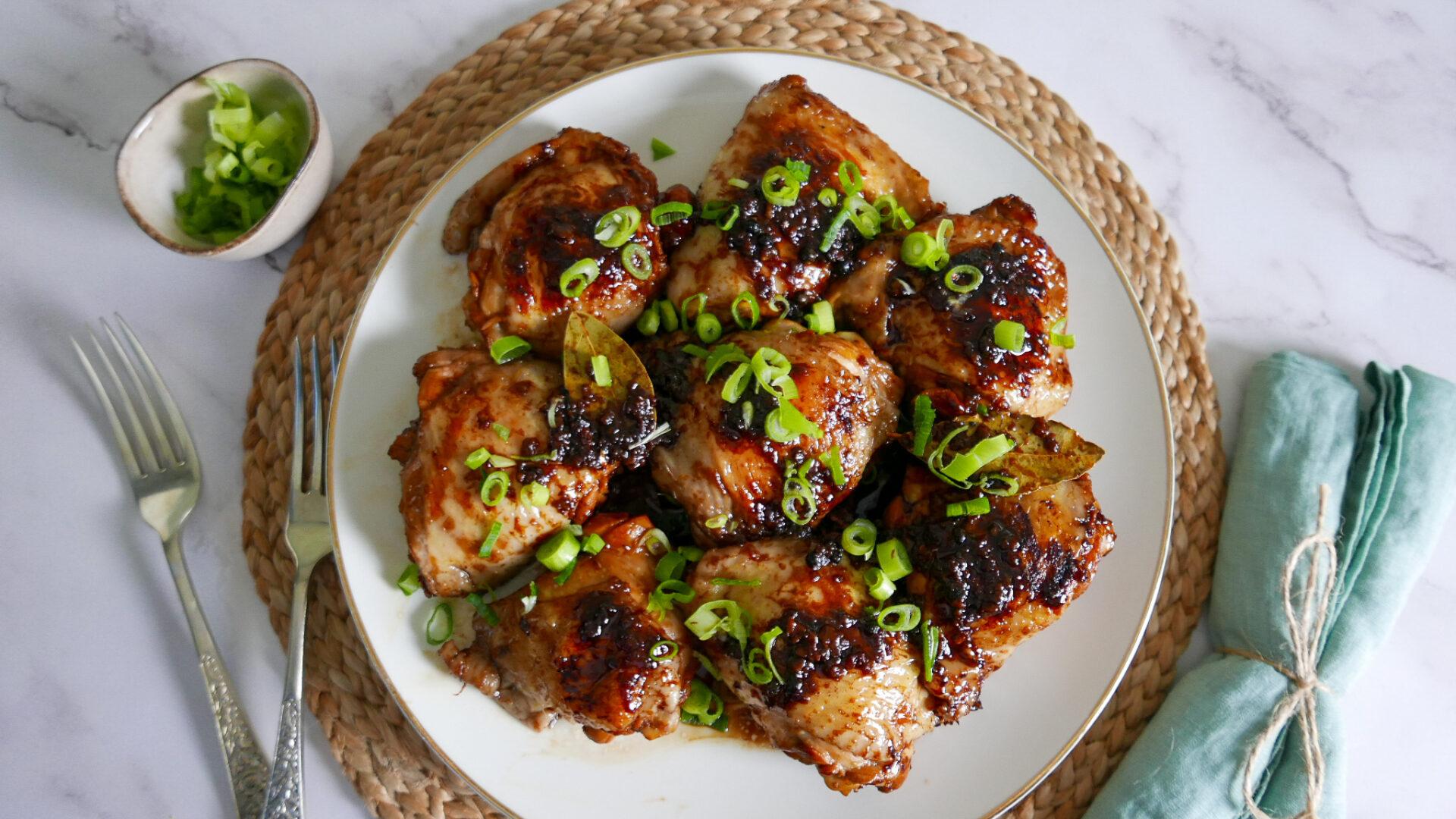
Filipino chicken adobo is one of those dishes that does almost all the work for itself. Marinate the chicken for 15 minutes, brown it in one pan, then let it bubble away in soy sauce and vinegar until the sauce turns glossy and the meat pulls easily from the bone. That’s it. No long list of ingredients, no fuss, and a flavour that tastes like you’ve been cooking all day.
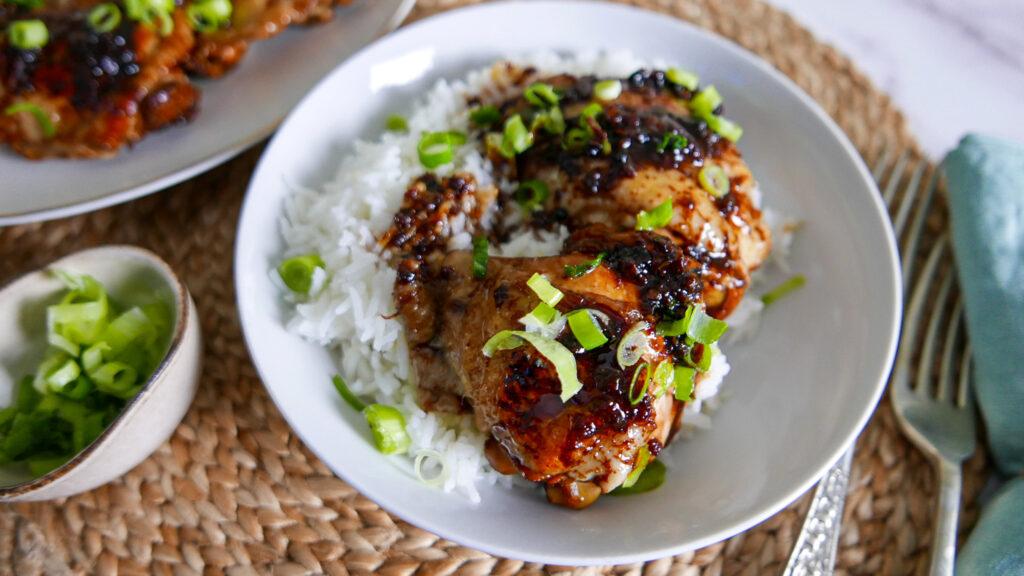
Often called the unofficial national dish of the Philippines, adobo is less a single recipe and more a method – meat braised slowly in vinegar, soy sauce, garlic and bay leaves until it’s tender and tangy. It’s a real Filipino classic, and every household has their own version. This is mine: quick enough for a weeknight, and even better the next day.
Why you’ll love this Filipino chicken adobo recipe
I first fell for Filipino chicken adobo because of how little it asks of you. A handful of ingredients you probably already have, one pan, and about 40 minutes start to finish. What you get back is deeply savoury, a little sweet, and properly tangy from the vinegar, with juicy chicken that soaks up all that flavour.
The other reason I make it again and again is the leftovers. The first time I cooked a big batch, I only meant to make dinner – but the pan sat in the fridge overnight, and by lunchtime the next day the sauce had deepened into something even better. Like a good curry, adobo rewards patience, so I now cook extra on purpose.
What is chicken adobo?
Adobo comes from the Spanish word adobar, meaning to marinate. When Spanish colonisers arrived in the Philippines, they borrowed the word for a technique locals were already using – simmering meat in vinegar to keep it in the heat. The vinegar and salty soy sauce do double duty here, giving the dish its sharp, savoury flavour while keeping the chicken beautifully tender.
It’s a genuine taste of the Philippines, and you’ll find endless regional takes across Filipino cuisine. Some cooks stir in coconut milk (adobo sa gata), some leave out the soy sauce for a paler version (adobong puti), and pork adobo is just as popular as chicken. This one keeps things classic and simple.
The ingredients you’ll need
- bone-in, skin-on chicken thighs – the bone adds flavour and the skin crisps up beautifully. You can use drumsticks or a mix of pieces too
- white vinegar – the backbone of adobo. See my note below on swaps
- low-sodium soy sauce – regular soy sauce works, but low-sodium lets you control the saltiness
- garlic – don’t be shy, adobo loves it
- bay leaves – for that distinctive, gently herbal aroma
- black peppercorns – whole, not ground, for little pops of warmth
- brown sugar – just a hint of sweetness to balance the tang
- spring onions (green onions) – sliced, to finish
- vegetable oil – for browning
Which vinegar is best for adobo?
Traditionally, Filipino cooks use cane vinegar or coconut vinegar (look for the Datu Puti label in Asian grocery stores). Both have a mellow, slightly sweet sharpness that suits the dish.
That said, this recipe is very forgiving. Plain white vinegar is what I reach for most often and it works brilliantly. Apple cider vinegar gives a fruitier note, while rice vinegar is milder if you prefer a softer tang. Use what you have.
How to make chicken adobo
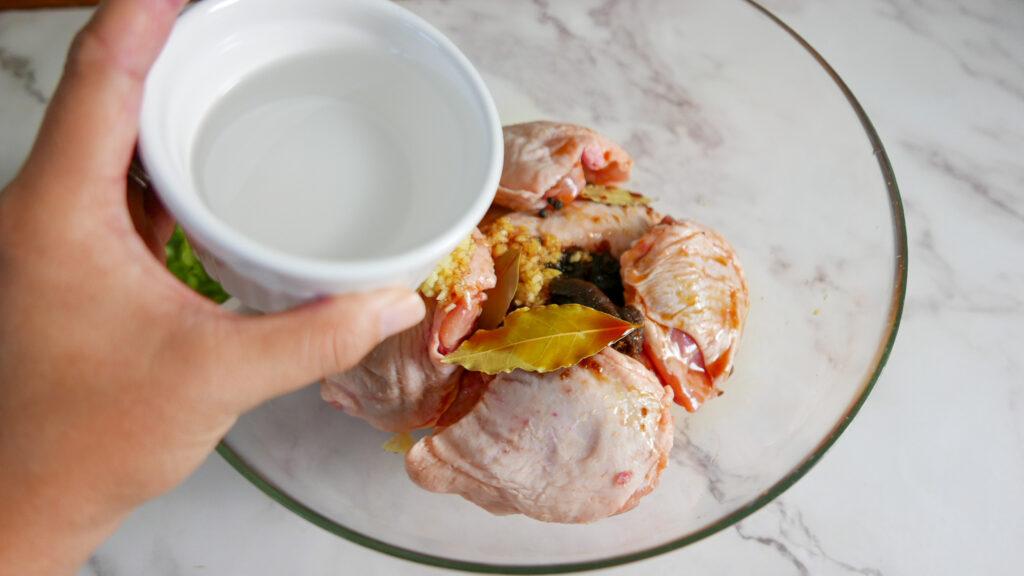
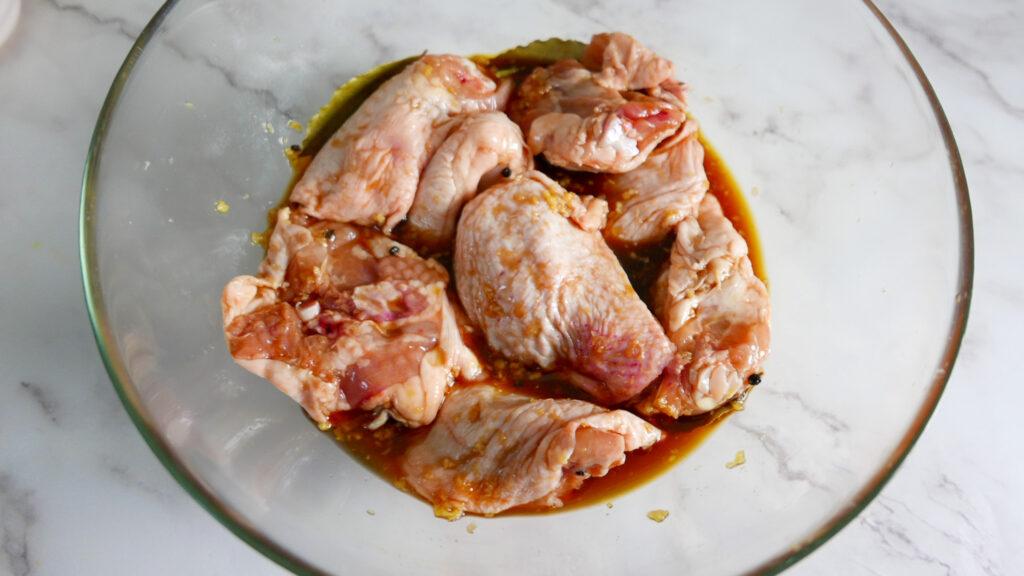
Make the marinade. In a large bowl, mix the vinegar, soy sauce, garlic, peppercorns, bay leaves and brown sugar.
Marinate the chicken. Add the chicken thighs and turn to coat. Leave for 15 minutes. You don’t need any longer than this – the flavours are punchy enough to work quickly.
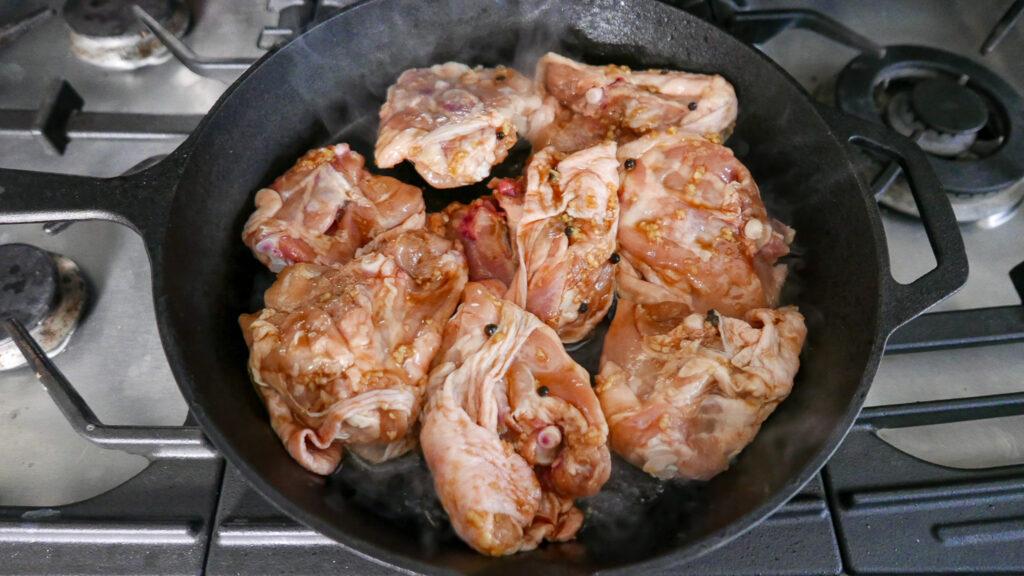
Brown the chicken. Heat the oil in a large pan over a medium heat. Lift the chicken from the marinade, letting the excess drip off (keep the marinade – you’ll need it), and brown the thighs on both sides for around 5 minutes.
Simmer. Pour in the reserved marinade and bring to the boil. Lower the heat and simmer gently for 10 minutes.
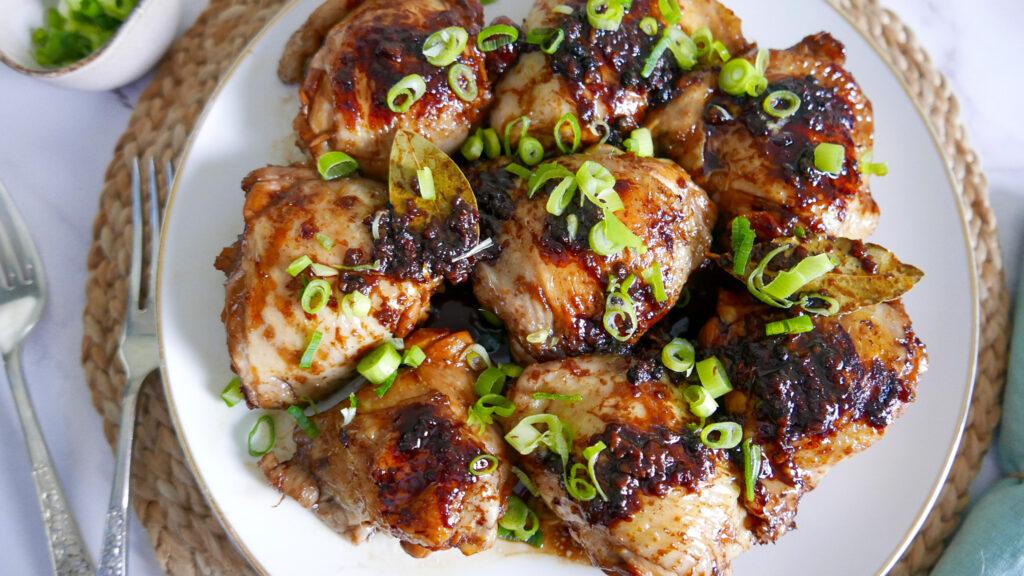
Reduce. Flip the chicken and carry on cooking, stirring now and then, until the sauce is glossy and has thickened to a rich coating – about another 10 minutes.
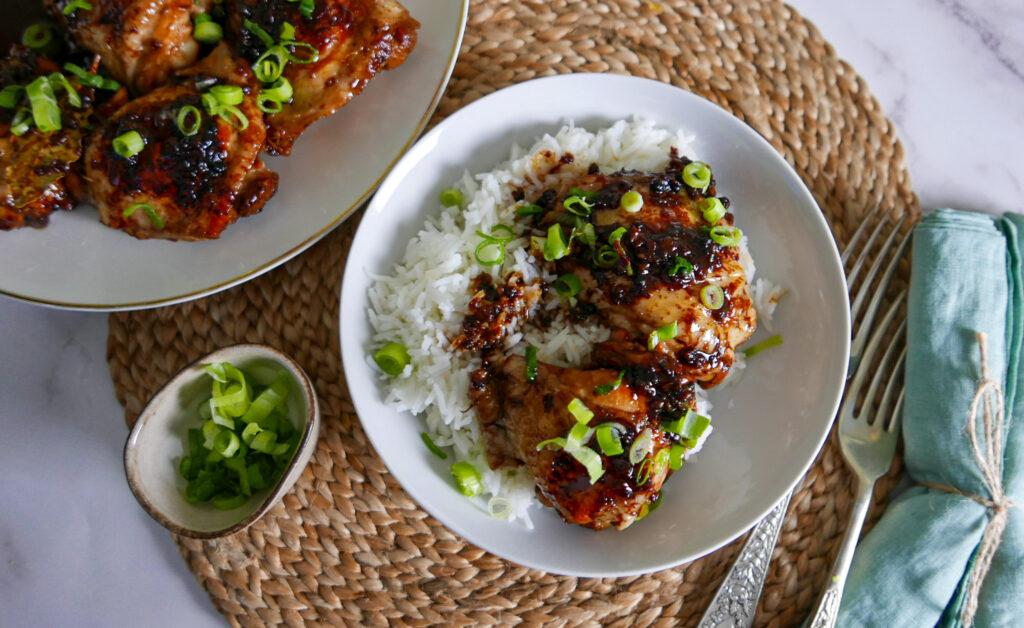
Serve. Spoon over plain rice and scatter with spring onions.

My top tips
- Keep the heat gentle while the sauce reduces. Too high and it can catch and turn bitter rather than glossy.
- Not sure the chicken is done? A thermometer should read 75°C in the thickest part of the thigh. If it needs longer, cover and cook on, loosening the pan with a little water if it looks dry.
- Want more sauce for your rice? Add 100ml water with the marinade and reduce for a few minutes longer.
Can I make it in a slow cooker or Instant Pot?
Yes to both. For a slow cooker, brown the chicken first for the best flavour, then tip everything in and cook on low for 4 to 5 hours until meltingly tender. In an Instant Pot, brown using the sauté setting, then pressure cook on high for 10 minutes with a natural release. Reduce the sauce on the hob afterwards if you’d like it thicker.
What to serve with chicken adobo
Plain steamed rice is the classic partner – it soaks up all that glossy sauce. For something lighter, try it with cauliflower rice. A sharp cucumber salad on the side cuts through the richness nicely, and any extra sauce is worth saving to spoon over everything.
Storing and leftovers
Adobo is one of the best things to have in the fridge. Cool it fully, then keep it in an airtight container for up to three days – and honestly, the next day it tastes even better as the flavours settle. It also freezes well for up to three months. Reheat gently in a pan until piping hot.
Chicken adobo FAQs
Do I need to marinate the chicken for long?
No. Fifteen minutes is plenty. The vinegar and soy sauce are bold enough to flavour the chicken quickly, and the rest happens as it simmers.
Can I use chicken breast instead of thighs?
You can, but thighs stay far juicier through the simmering. If you use breast, reduce the cooking time so it doesn’t dry out.
Why is my adobo sauce too sharp?
The sharpness of the vinegar mellows as it cooks. If it’s still too tangy for you, stir in a little extra brown sugar, or let it reduce for a few minutes more.
Is adobo meant to be sweet?
Only slightly. The brown sugar is there to balance the salt and vinegar, not to make it sweet. Adjust to your taste.
More easy chicken recipes you’ll love
-
Easy crispy air fryer soy sauce chicken thighs
-
Air fryer honey garlic chicken thighs
-
Crispy honey garlic chicken with a sticky soy sauce
-
Air fryer Japanese fried chicken (karaage)

Filipino chicken adobo
Ingredients
- 8 bone-in skin-on chicken thighs
- 175 ml white vinegar
- 120 ml low-sodium soy sauce
- 8 cloves garlic minced
- 3 bay leaves
- ½ teaspoon black peppercorns
- 1 tablespoon brown sugar
- 1 tablespoon vegetable oil
- 3 spring onions thinly sliced
- cooked rice to serve
Instructions
- In a large bowl, combine the vinegar, soy sauce, garlic, peppercorns, bay leaves and brown sugar.
- Add the chicken thighs and turn to coat. Leave to marinate for 15 minutes.
- Heat the vegetable oil in a large pan over a medium heat. Lift the chicken from the marinade, letting the excess drip off (reserve it), and brown the thighs on both sides for around 5 minutes.
- Pour in the reserved marinade and bring to the boil. Lower the heat and simmer for 10 minutes.
- Flip the chicken and cook, stirring occasionally, until the sauce is glossy and thickened to a rich coating, about another 10 minutes. The chicken should reach 75°C in the thickest part.
- Serve over cooked rice, scattered with spring onions.
Notes
- Cane or coconut vinegar (Datu Puti) is traditional, but white, apple cider or rice vinegar all work well.
- For more sauce, add 100ml water to the marinade and simmer a little longer.
- Slow cooker: brown the chicken first, then cook on low for 4 to 5 hours. Instant Pot: brown on sauté, then high pressure for 10 minutes with a natural release.
- Leftovers keep in an airtight container for up to 3 days, or freeze for up to 3 months. The flavour deepens overnight.
Nutrition
Did you make this Filipino chicken adobo recipe?
Please let me know how this Filipino chicken adobo recipe turned out for you. Leave a comment below and tag @cooksimplyathome on Instagram. If you’d like more food inspiration, check out my index.
Really tasty, and I had most of the ingredients already, so this was a great dinner! Good flavours. I did add more water to make more sauce as you said.
I am so glad you enjoyed it
Couldn’t believe how easy this was. I didn’t have much in the fridge except chicken thighs so this was just the recipe we needed!
Amazing! I am glad you enjoyed it. It’s a really simple, tasty dinner