Last Updated on 8 January 2026 by cooksimply
If there’s one vegetable I eat on a regular basis, it’s pak choi. I grew up eating it at least 3-4 times a week – my mum would stir-fry it with garlic as a quick side dish, throw it into soups, or steam it with oyster sauce.
Now I cook it the same way for my family. It’s versatile, tasty, and cooks in under 5 minutes. I sometimes throw it in noodles or stir-fries, it’s brilliant with ramen, and it’s a fantastic vegetable dish to accompany meat and fish.
One of my favourite ways to cook it is this easy garlic pak choi recipe. It’s exactly how my mum taught me, and it’s the way I make it most often.
Pak choi vs bok choy – what’s the difference?
Absolutely nothing! Pak choi is a leafy Chinese cabbage and bok choy is the exact same leafy Chinese cabbage. The only difference is the name.
Pak choi is the name used in the United Kingdom. Bok choy (or bok choi) is what it’s called in the USA and Australia. You might also see it spelled pak choy or pok choi.
In Chinese, it’s called 白菜 (bái cài), which literally means “white vegetable” because of the white stems. Some people also call it Chinese white cabbage or Chinese chard.

Why pak choi is amazing
Let me tell you why I love cooking with pak choi and why it’s a staple in Chinese cooking:
It’s incredibly quick – Pak choi cooks in 3-5 minutes. Perfect for busy weeknights when you need a vegetable side dish fast.
It’s mild and versatile – The flavour is subtle and slightly sweet. It works with everything from delicate fish to rich pork belly.
It’s nutritious – Packed with vitamins A, C, and K, plus calcium and iron. More on this below.
It’s affordable – Usually cheap at Asian supermarkets and increasingly common in regular supermarkets.
The texture is perfect – Crisp white stems and tender green leaves. You get two textures in one vegetable.
How to select fresh pak choi
Here’s what I look for when buying pak choi at the market:
Crisp white stems – They should be firm and snap easily, not bendy or soft. If the stems feel limp, the pak choi is old.
Bright green leaves – Vibrant green with no yellowing or brown spots. Yellow leaves mean it’s past its best.
No wilting – The leaves should stand upright, not droopy or wilted.
Smaller is sweeter – Baby pak choi (around 10-15cm) is more tender and sweeter. Large pak choi can be more fibrous, though still delicious.
No damage or holes – Check for insect damage or bruising.
I usually buy mine from Asian supermarkets where they’re fresher and cheaper. Regular supermarkets are fine too, just check the quality carefully.
How to store and prep pak choi
Storage: Keep pak choi in the crisper drawer of your fridge in a plastic bag with some air holes. It stays fresh for 4-5 days. Don’t wash it before storing – moisture makes it rot faster.
Washing: Pak choi grows close to the ground so it can be gritty. Cut off the root end first, separate the leaves, then rinse each leaf under cold water. Check between the stem layers where dirt hides.
Prep: For baby pak choi, you can cook them whole or halved. For large pak choi, separate the leaves and cut the stems into bite-sized pieces. The stems take slightly longer to cook than the leaves.

How to cook pak choi – 3 easy methods
This is the beauty of pak choi – you can cook it three different ways and it’s delicious every time. Here’s how I do each method:
Method 1: Stir-frying (my favourite)
This is how I cook it most often. High heat, quick cooking, loads of flavour. The garlic pak choi recipe below uses this method.
Heat your wok until very hot, add oil and aromatics (garlic/ginger), then throw in the pak choi. Stir-fry for 2-3 minutes until the leaves wilt and stems are tender-crisp. Add sauce (soy, oyster, sesame oil) and you’re done.
Best for: Quick weeknight sides, when you want maximum flavour.
Method 2: Steaming
The gentlest cooking method. Place pak choi in a steamer basket over boiling water for 3-4 minutes until just wilted. Then dress with oyster sauce, sesame oil, chilli oil, or soy sauce.
Best for: When you want the pure flavour of pak choi, serving with delicate fish, or keeping it light and healthy.
Method 3: Boiling/Blanching
Bring a pot of water to the boil, add the pak choi, and cook for 2-3 minutes. Drain well and dress with your choice of sauce.
Best for: When you’re already boiling water for noodles, or when you want a very quick method.
I can also throw pak choi into noodle soups, add it to chicken chow mein, or toss it into Singapore noodles at the last minute.
Easy garlic pak choi recipe – step by step
This is exactly how my mum makes it, and how I make it at least once a week. It takes 5 minutes total and tastes incredible.
The technique
Cut the thick root end off the pak choi to separate the leaves. Rinse everything in cold water and leave to drain in a colander.
Finely chop the garlic. You can use a garlic press if you prefer, but I like to chop it by hand – you get better flavour and texture.
Heat vegetable oil in a large wok on medium-high heat. This is important – you need high heat for stir-frying. Add the garlic and stir quickly for about 10 seconds until fragrant. Don’t let it burn.
Add the pak choi, soy sauce, and immediately start tossing everything together. Stir-fry for about 1 minute so everything gets coated.
Then place a lid on top and let it steam for 3-4 minutes. This combination of stir-frying and steaming cooks the pak choi perfectly – the stems stay crunchy while the leaves wilt.
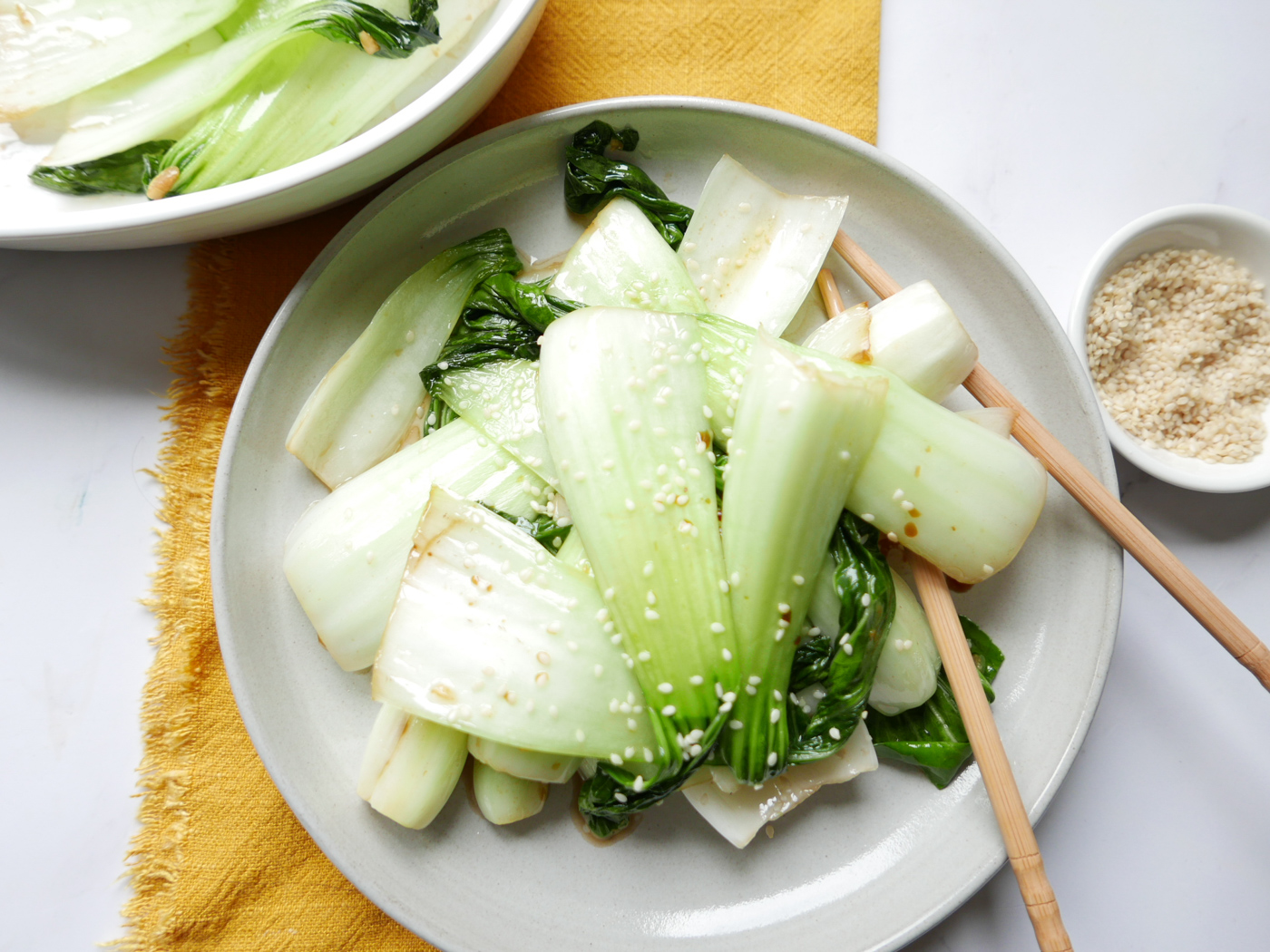
Remove the lid, add the sesame oil, give it one final toss, and serve immediately. Sprinkle sesame seeds on top if you want.
The key: You want the stems to still have a good crunch. Overcooked pak choi becomes soggy and loses its appeal.
What to serve with pak choi
What NOT to serve with it! You can serve pak choi alongside almost any main meal. Here’s how I use it:
With Chinese mains: It’s the classic vegetable side for Chinese meals. I serve it with almost everything – chicken, beef, pork, fish, tofu.
In stir-fries and noodles: Slice it up and throw it in at the last minute. It adds freshness and crunch.
In soups: Drop whole baby pak choi into wonton soup, ramen, or noodle soups for the last 2-3 minutes of cooking.
In dumplings: Chop finely and add to dumpling filling. It adds moisture and nutrition.
Recipes that pair perfectly with garlic pak choi:
-
Ginger soy salmon – light and healthy
-
Braised pork belly – rich and tender
-
Chinese steamed spare ribs – dim sum style
-
Easy bourbon chicken – sweet and sticky
-
Katsu chicken curry – crispy and delicious
-
Char siu pork – sweet BBQ pork
-
Crispy chilli beef – takeaway favourite
-
Chinese crispy pork belly – ultimate comfort food
Best alternatives to pak choi
Can’t find pak choi? Here are the best substitutes I’ve used:
Chinese cabbage (napa cabbage) – Same family, slightly milder flavour. Cut into strips and cook the same way.
Swiss chard – Similar texture with the crunchy stems and tender leaves. Works brilliantly stir-fried.
Spinach – Much more delicate, cooks faster (1-2 minutes), but the flavour works well with garlic and soy sauce.
Romaine lettuce or baby gems – Surprisingly good! I discovered this when I couldn’t find pak choi. Stir-fry quickly on high heat and they stay crisp.
Choy sum – Another Chinese green vegetable. Slightly more bitter than pak choi but cooks the same way.
Gai lan (Chinese broccoli) – More robust flavour, slightly longer cooking time (5-6 minutes).
My favourite substitute is actually romaine lettuce. It sounds weird, but try it – stir-fried lettuce with garlic is genuinely delicious.

Health benefits of pak choi
One of the reasons I eat pak choi so often is because it’s incredibly nutritious. Here’s what you’re getting:
Low in calories – Only about 13 calories per 100g. Perfect if you’re watching your weight.
Rich in vitamins – Excellent source of vitamins A, C, and K. One serving gives you over 100% of your daily vitamin A needs.
Good source of calcium – Important for bone health. Particularly good for people who don’t eat dairy.
High in antioxidants – Contains powerful antioxidants that help fight inflammation.
Supports heart health – The potassium, calcium, and magnesium help regulate blood pressure.
Good for digestion – High in fibre which aids digestion and gut health.
Bone health – The vitamin K content is excellent for bone strength.
My mum always said vegetables should make up half your plate, and pak choi made that easy because it tastes so good.
Common mistakes to avoid
After cooking pak choi hundreds of times, here are the mistakes I see people make:
Overcooking it – This is the biggest one. Pak choi should still have crunch in the stems. Overcooked pak choi is soggy and unappetising. 3-5 minutes max.
Not washing it properly – Pak choi grows close to soil and dirt hides between the stem layers. Separate the leaves and rinse each one.
Adding garlic too early – Garlic burns easily. Add it to hot oil, stir for just 10 seconds until fragrant, then immediately add the pak choi.
Using a small pan – You need space to toss the pak choi. A crowded pan steams instead of stir-fries. Use a large wok or pan.
Cutting it too small – Baby pak choi can be cooked whole or halved. Large pak choi should be separated into leaves, but don’t chop it into tiny pieces – you lose the texture.
Not drying it after washing – Wet pak choi splutters in hot oil and doesn’t stir-fry properly. Drain well or pat dry with kitchen paper.
Using low heat – Stir-frying needs high heat. Low heat makes the pak choi watery and limp.

Recipe variations I love
While the basic garlic pak choi is my go-to, here are variations I make regularly:
Garlic and ginger – Use half garlic, half fresh ginger. Gives it a warming, spicy note.
Oyster sauce pak choi – Skip the soy sauce and use 2 tablespoons of oyster sauce instead. Richer, slightly sweet.
Chilli pak choi – Add fresh red chilli or a spoonful of chiu chow chilli oil at the end. My favourite when I want heat.
Sesame pak choi – Double the sesame oil and add extra sesame seeds. Nutty and delicious.
With shiitake mushrooms – Slice shiitake mushrooms and stir-fry them with the garlic before adding pak choi. Adds umami depth.
Frequently asked questions
How long does pak choi take to cook?
3-5 minutes depending on the cooking method. Stir-frying takes 3-4 minutes, steaming takes 3-4 minutes, and boiling takes 2-3 minutes. Don’t overcook it – the stems should still have a crunch.
Do you eat the white stem part of bok choy?
Yes, absolutely! The white stems are actually the best part – they’re crunchy, slightly sweet, and hold up well to cooking. In fact, I often prefer the stems to the leafy parts. You eat the entire vegetable.
Is pak choi healthy?
Very healthy! It’s low in calories (only 13 per 100g), high in vitamins A, C, and K, and a good source of calcium and iron. It’s full of antioxidants and supports heart health and bone strength.
How do you know when pak choi is cooked?
The leaves should be wilted but still bright green, and the stems should be tender but still crisp. If you can easily pierce the thickest part of the stem with a fork but it still has some resistance, it’s perfect.
Can you eat pak choi raw?
Yes, you can eat baby pak choi raw in salads. It has a mild, slightly peppery taste. However, I much prefer it cooked – the flavour mellows and becomes sweeter, and the texture is better.
Does pak choi need to be washed?
Yes, definitely wash it thoroughly. Pak choi grows close to the ground and dirt gets trapped between the stem layers. Cut off the root end, separate the leaves, and rinse each leaf under cold water.
What does pak choi taste like?
Pak choi has a mild, slightly sweet flavour with a hint of peppery mustard (it’s part of the cabbage family). The white stems are crunchy and juicy, while the leaves are more tender. It’s much milder than other Chinese greens.
Can I cook pak choi in advance?
It’s best cooked fresh and served immediately. Cooked pak choi doesn’t reheat well – it becomes soggy and loses its crunch. If you must prep ahead, wash and chop it, then store in the fridge and cook when ready to eat.
What’s the difference between baby pak choi and regular pak choi?
Baby pak choi is simply harvested younger – it’s smaller (10-15cm), more tender, and sweeter. Regular pak choi is larger with thicker stems and bigger leaves. Both taste great, but baby pak choi is more delicate.
Can I freeze pak choi?
I don’t recommend it. Pak choi has high water content and becomes mushy when frozen and thawed. It’s best eaten fresh. It only keeps for 4-5 days in the fridge anyway, so just buy what you’ll use.
More Asian vegetable and recipe ideas
If you enjoyed this pak choi recipe, try these other quick Asian sides and mains:
-
Chicken chow mein – 15-minute noodles
-
Singapore noodles – curry-spiced
-
Chinese crispy pork belly – amazing crackling
-
Crispy chilli beef – takeaway favourite
-
Ginger soy salmon – healthy and quick

Super tasty stir-fried pak choi [bok choi]
Ingredients
- 300 g of pak choi
- 1 tablespoon vegetable oil
- 3 cloves garlic finely chopped
- 2 tablespoons of soy sauce
- 1 teaspoon sesame oil
- sesame seeds for garnish
Instructions
- Cut a thick slice from the pak choi root to separate the leaves. Rinse and drain.
- Heat the vegetable oil in a large wok or deep pan over a medium heat. Then add the garlic, soy sauce and pak choi.
- Toss the pak choi until coated and put a pan lid over the top. Reduce the heat and cook for 3-4 minutes, tossing the pak choi a few times.
- WIth only one minute left to cook, add the sesame oil and stir through.
- Before serving, sprinkle some sesame seeds on top.
Notes
Nutrition
Did you make this pak choi recipe?
Please let me know how it turned out! Leave a comment below and tag @cooksimplyathome on Instagram.
You can find other delicious Asian recipes here.

Excellent recipe turned out to be delicious with both garlic and ginger
Thank you for letting me know – and glad it turned out delicious
Tasty recipe
I’m glad you think so 🙂